
Reporting note: this article draws on Sky Sports; LodiScore provides the summary and editorial framing.
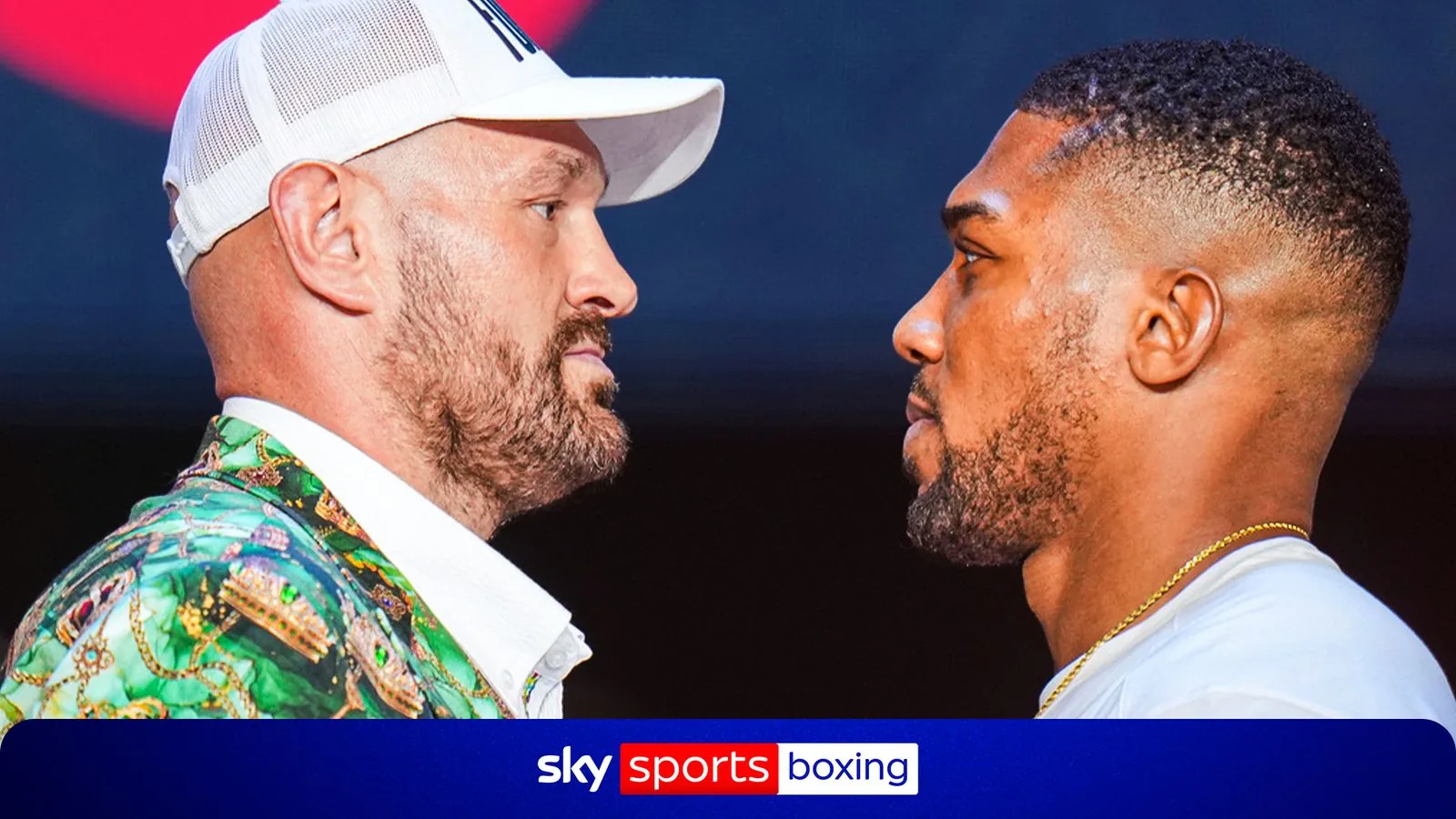
Sky Sports boxing experts Andy Scott and John Dennen spent a bonus episode of the Toe2Toe podcast answering reader questions about Fury vs Joshua, the heavyweight fight scheduled for December 11 at the Principality Stadium in Cardiff. The questions covered shared opponents, the WBA belt, the promoter, the undercard and the hour at which the first bell will ring. The rivalry is almost a decade old. It finally has a date.
Fury vs Joshua: the shared-opponent ledger
On the shared-opponent question, the answer tilted towards Fury. Both men have fought Oleksandr Usyk twice and lost twice. Joshua did not box well in the first meeting but was stronger in the rematch. Fury looked strong across the first half of his first Usyk fight, and the panel judged him to have done best against the highest-level common opponent.
Francis Ngannou cuts the other way. Fury struggled with the former UFC champion; Joshua levelled him. Wladimir Klitschko is the third shared name. Joshua met an older Klitschko, possibly one who had learned from the Fury defeat, and had the more torrid night. Fury controlled his man and won a decision in Germany.

The verdict leaned one way without settling: Fury comes out ahead against the best of their shared opponents, though the panel called it hard to call.
What Anthony Joshua needs from the fight
Joshua's resume is outstanding and includes high-quality opponents, but he has not fought Deontay Wilder, whom Fury boxed three times. Fury has held every major heavyweight world title, at different times, and arguably performed better across the two Usyk fights. On legacy, the panel said Joshua probably needs the win more.
The stamina question drew a factual answer. Joshua has gone 12 rounds on five occasions and there has been no suggestion of a stamina problem. He is the more musclebound of the two. Fury has a natural rhythm but does not set a relentless pace; to break Joshua late he would have to make him think and work at a speed he is not used to.
Power is the other half of that argument. Fury was long judged not to punch his full weight, an assumption he overturned in the second and third Wilder fights. Joshua has been hurt, most recently and most worryingly by Kristian Prenga. Fury is dangerous for him. Damage in this division is cumulative and rarely glamorous.
The WBA belt and the money behind the card
The WBA has sanctioned the bout for a "super" title. Neither the sanctioning body nor anyone else has explained why. Both men are former champions, but the WBA already had a "regular" titlist in Murat Gassiev, and neither Fury nor Joshua was rated the organisation's No 1 contender going in. The panel's view was blunt: the fight does not need a belt.
The money comes from Turki Alalshikh, chairman of Saudi Arabia's General Entertainment Authority. The announcement said he is staging the fight in partnership with Dana White, which raises questions about how White's involvement sits alongside the contracts held by Eddie Hearn with Joshua and Frank Warren with Fury. Alalshikh is putting up the money and is the promoter of the event.
Cardiff, the clock and the undercard
Wembley was not an option because it has no roof. Weather at that time of year is probably a bigger factor than licensing a late main-event start.
The start time is built for the American audience. Fights staged in Saudi Arabia have run in the early hours local time; Joseph Parker, visited in camp, was not getting up until 4.30pm, ate at 5pm and trained at 2am. Fighters shift their schedules and settle into a rhythm. Fury is already on US time, training in America, and Netflix's audience stretches coast to coast across the United States.
The undercard is not confirmed. Dana White is looking to make Jai Opetaia versus Deontay Wilder. Queensberry and Matchroom will each have a fighter on the bill. Welsh boxers would be welcome; confirmation has not arrived.
Retirement, a rematch and what follows
A draw would make a rematch almost inevitable. Both men would have learned plenty about each other, the fight could be sold again, and they would have to run it back.
Retirement depends on the manner of defeat. Fury has said he wants to go on as long as he can, though he has retired and unretired several times. A heavy loss might force Joshua to consider it. As an Olympic gold medallist and a two-time unified world heavyweight champion, he has nothing left to prove.
On what follows a win: Fury would seek a trilogy with Usyk, but the market for it is doubtful. Daniel Dubois might be an easier sell for either winner. Neither man has beaten Usyk, and a third fight with him is probably not needed.
The original report is at skysports.com.