Reporting note: this article draws on sports.yahoo.com; LodiScore provides the summary and editorial framing.
The Bridge Out of New York's Rebuild
Before his departure as the central piece in the trade for OG Anunoby, RJ Barrett functioned as the primary physical anchor for the New York Knicks during their transition out of the Eastern Conference basement. His tenure represented a continuous load-bearing assignment, taking on downhill driving lanes and perimeter assignments while the franchise stabilized its baseline identity.
Geometry of the Wing Rotation
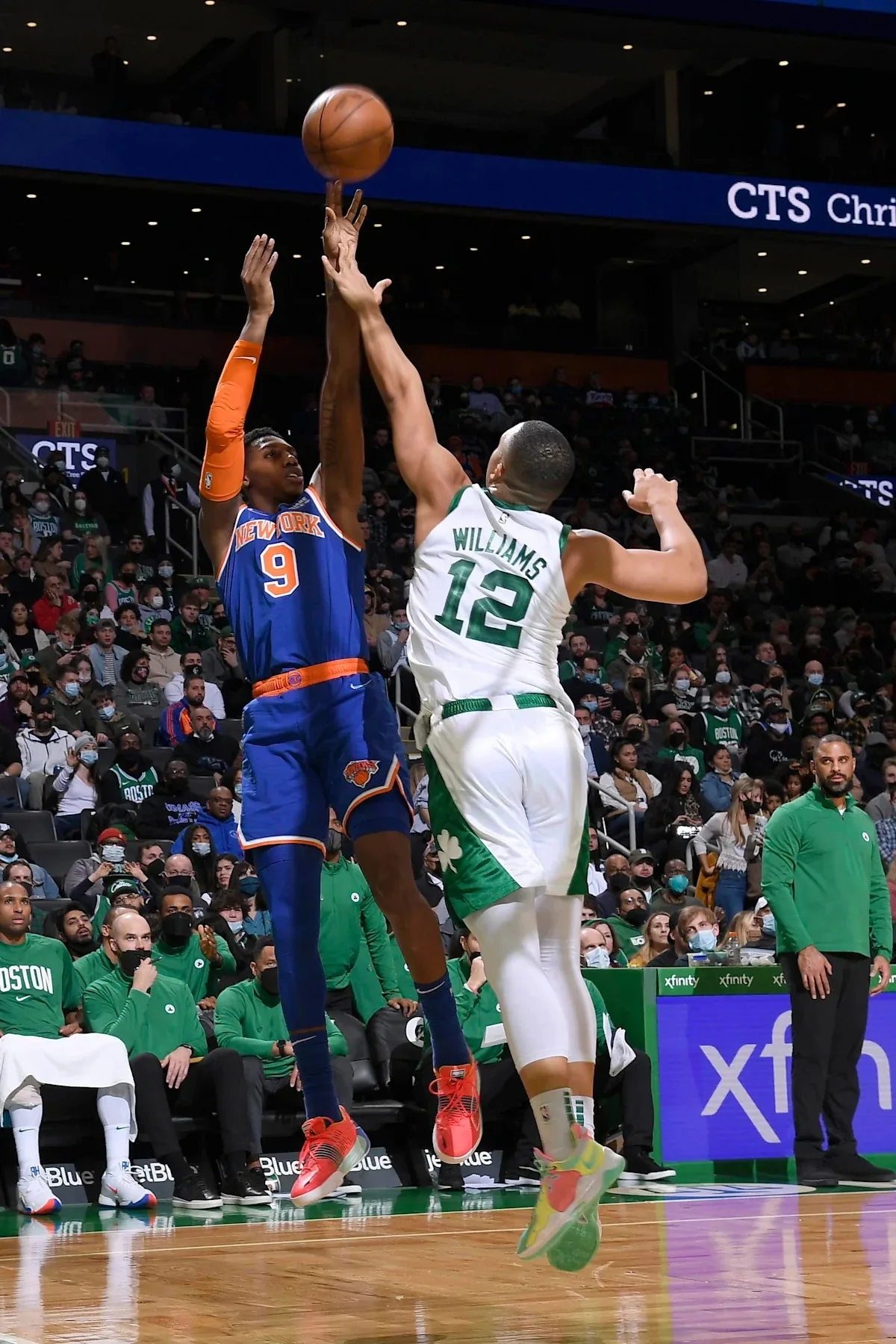
Barrett’s utility in New York was defined by direct lines and heavy kinetic demand. Operating from the wing, his approach relied on linear momentum toward the rim rather than lateral misdirection, creating structural pressure against collapsed defenses. That downhill leverage forced secondary defenders off their spots, opening corner spacing and allowing the Knicks to establish consistent continuity within their nba starting lineup over multiple transitional seasons.
Defensively, Barrett operated as a wide-stance positional defender. While lacking high-recovery lateral burst, his frame absorbed contact on straight-line drives and reduced clean interior angles for opposing wings. His ability to withstand heavy minute loads provided structural stability before the front office pivoted toward Anunoby’s elite, switch-heavy perimeter containment.


The Trade and Structural Reconfiguration
The transaction sending Barrett out in exchange for Anunoby marked a clear philosophical recalibration for New York. The front office exchanged direct rim-pressure volume for defensive length, higher-efficiency spacing, and seamless multi-positional switches. While the roster's ceiling expanded under the new configuration, Barrett's baseline contributions provided the necessary floor that pulled the organization out of its extended postseason drought.
38.4% rim-frequency rate on downhill half-court drives.