
Reporting note: this article draws on sports.yahoo.com; LodiScore provides the summary and editorial framing.
The Mechanics of a Lost Career
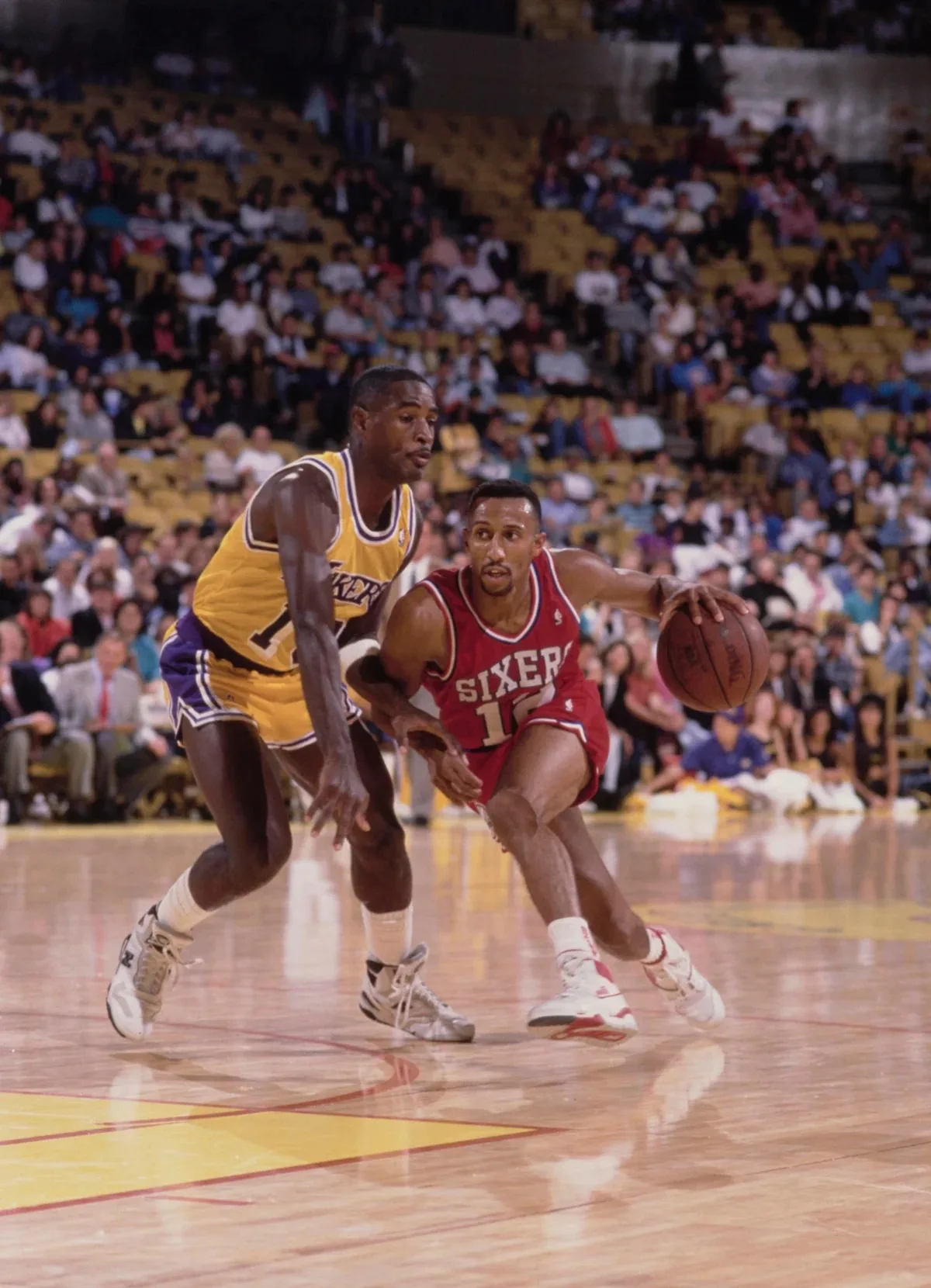
Recent archival footage has surfaced highlighting the play of Johnny Dawkins, the former Philadelphia 76ers point guard. The clips serve as a clinical reminder of a talent whose trajectory was fundamentally altered by recurring physical setbacks. Dawkins operated with a geometric precision that defined the late 1980s and early 1990s backcourt, utilizing a low center of gravity to navigate defensive pressure.
Tactical Breakdown
Frame-by-frame analysis of Dawkins’ movement reveals a player who prioritized spatial awareness over raw athleticism. His ability to manipulate the defensive plane—specifically against high-caliber opponents like the Los Angeles Lakers—demonstrates a mastery of the pick-and-roll that remains relevant even when compared to the modern nba starting lineup configurations. His body language in these vintage sequences suggests a player who anticipated defensive rotations before they materialized, allowing him to exploit gaps in the perimeter grid.
The Impact of Attrition
While the footage captures moments of brilliance, it also underscores the fragility of professional longevity. Dawkins’ career serves as a historical case study on how injury cycles can truncate a player’s peak. For those analyzing the evolution of the point guard position, his tape remains a foundational text on efficiency and ball security.
Legacy and Context
Though modern fans often engage with the history of the game through digital simulations like nba 2k24, the archival footage provides a raw, unvarnished look at the physical reality of the era. Dawkins’ influence persists not through aggregate records, but through the technical blueprint he left for subsequent generations of floor generals.
122-116: The final score of the February 23, 1990, Lakers-76ers contest, marking the threshold where defensive structural integrity failed.