Reporting note: this article draws on sports.yahoo.com; LodiScore provides the summary and editorial framing.
The Anatomy of Boston's Historic 1986 Title Run
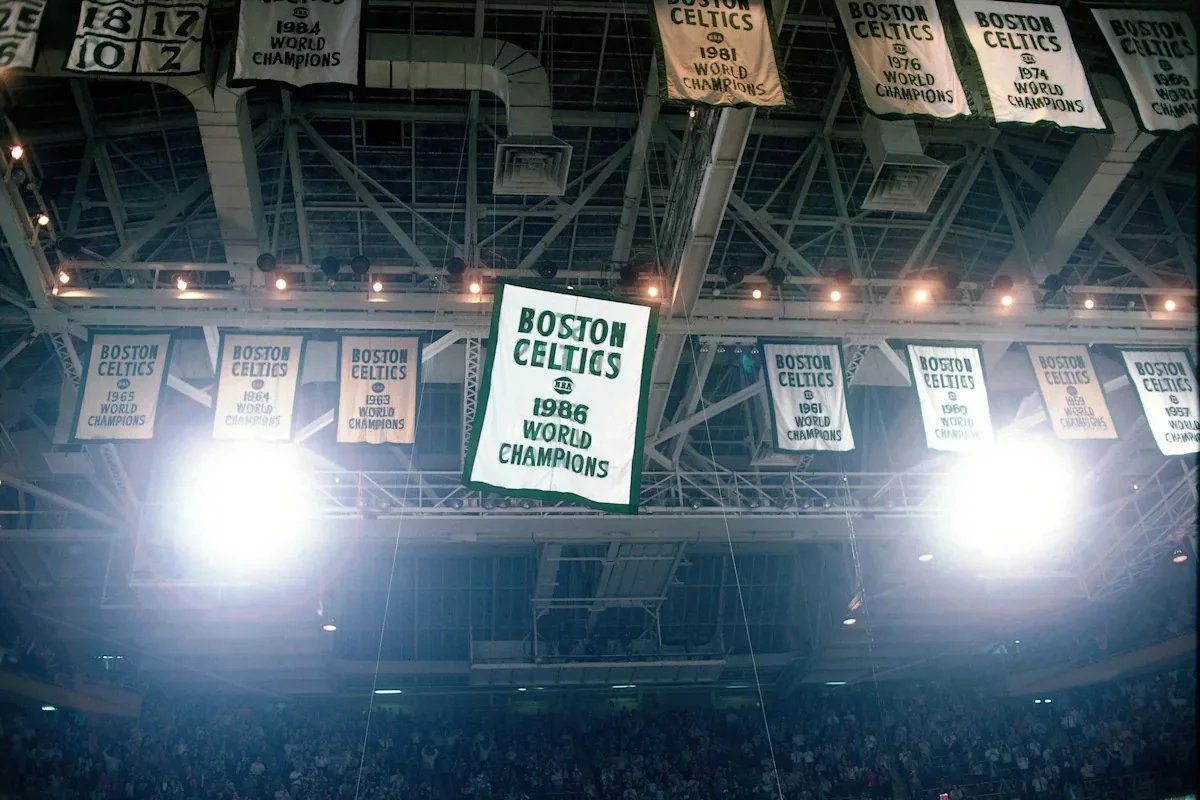
As part of an ongoing retrospective documenting the 18 championship banners raised in Boston, focus turns to the 1986 Boston Celtics—a squad widely evaluated as one of the most structurally complete rosters in basketball history. The archival review highlights how the franchise's 16th championship established a benchmark for two-way execution, spatial connectivity, and interior dominance at the original Boston Garden.
Architectural Balance and Floor Spacing
The 1985-86 Celtics operated with an unusual balance of size, vision, and kinetic continuity. Rather than relying on isolated perimeter breakdowns, their offensive system functioned as an interconnected web of high-low entries, quick weak-side cuts, and rapid ball reversal. The baseline and high post operated as primary leverage points, collapsing opposing defensive frames before redistributing out to open catch-and-shoot angles.
Defensively, the roster relied on disciplined verticality and layered help assignments rather than pure athletic recovery. When opposing offenses attempted to penetrate the lane, Boston’s backline formed an immediate load-bearing wall, forcing kickouts into tightly contested closeout corridors. The balance across their traditional five-man unit set a standard for cohesion that modern fans frequently study and replicate across classic rosters in nba 2k24 or analyze when evaluating a modern nba starting lineup.


Long-Term Legacy and Historical Context
The 1986 championship marked the apex of the Larry Bird era in Boston, culminating in a dominant postseason run that cemented their standing among the league's all-time historical benchmarks. The retrospective series continues to catalog the tactical evolution of each title team, charting how front-court passing and positional discipline defined Boston's golden era.
40-1 home floor regular-season record; 1.04 points allowed per possession across the 1986 postseason.